Short answer: There is no law that makes homeowners get an annual gas safety check. The legal duty applies to landlords. Gas Safe Register still recommends every household has its gas appliances safety checked each year, because a badly working boiler, fire or cooker can leak gas or produce carbon monoxide without any obvious sign.
Most gas safety advice is written for landlords. That is because landlords have a legal duty and owners do not. But more than half of homes in some north London boroughs are owner occupied. In Enfield, 52.4% of households owned their home at the 2021 Census (ONS, Enfield). This guide is for those owners: whether to book an annual check, and what it covers.
The law for owners
Regulation 36 of the Gas Safety (Installation and Use) Regulations 1998 places the annual check duty on landlords (HSE). An owner living in their own home is not a landlord, so no yearly certificate is required in law.
The rules that do apply to owners are:
- any gas work must be done by a Gas Safe registered engineer
- a new boiler or gas fire must be notified to the council, with a certificate sent to you
- a carbon monoxide alarm is required where a new or replacement fixed combustion appliance is installed, under Approved Document J
What Gas Safe Register recommends
Gas Safe Register’s home safety tips start with one line: get an annual gas safety check (Gas Safe Register). It also advises learning the main symptoms of carbon monoxide poisoning, checking appliances for warning signs, and fitting an audible carbon monoxide alarm.
The reason is simple. Carbon monoxide has no colour, taste or smell. An appliance can burn badly for months before anyone notices.
What a homeowner check covers
| Appliance | What the engineer looks at |
|---|---|
| Boiler | Flue intact and clear, combustion readings, safety devices, gas pressure |
| Gas hob or cooker | Flame picture, secure fitting, hose and connection, ventilation |
| Gas fire | Chimney or flue draws properly, spillage test, condition of fire and surround |
| Pipework | A tightness test for leaks across the installation |
| Ventilation | Air vents present where needed and not blocked |
You can ask for a written report at the end. It will not be a formal landlord record, but it is useful for your own files and if you sell later.
Why it matters in Enfield homes
Enfield has a lot of interwar housing: semis and terraces in Southgate, Palmers Green, Winchmore Hill and Bush Hill Park. These homes often have more gas appliances than a modern flat.
Gas fires in old fireplaces. Many front rooms still have a gas fire on a hearth, using the original chimney. A chimney that has not been swept, or has a bird’s nest in it, can stop fumes clearing. Gas Safe Register advises regular servicing of gas fires by a registered engineer and lists warning signs that a fire needs attention (Gas Safe Register, gas fire guide).
System and regular boilers. Larger homes often have a boiler with a hot water cylinder in an airing cupboard. Older regular boilers may have open flues or be in kitchens that have since been extended.
Hard water. Enfield’s water is hard. Thames Water’s 2025 figures show Enfield Town averaging 266 mg/l and Enfield South 274 mg/l as calcium carbonate (Thames Water, Enfield Town zone; Enfield South zone). Thames Water calls anything from 200 to 300 mg/l hard (Thames Water). Parts of Enfield are supplied by Affinity Water instead, so check your bill. Scale does not make a boiler unsafe in itself, but it shows up during checks as noise and poor hot water.
More on local housing is on our Enfield area page.
Check or service?
Many owners book a boiler service and assume that covers everything. It covers the boiler. It does not cover the hob or gas fire unless the engineer is asked to look at them. HSE recommends appliances are serviced to the manufacturer’s instructions, or annually if there are none (HSE).
A practical approach for owners is a yearly boiler service plus a safety check of the other appliances at the same visit. Our post on gas safety checks versus boiler services explains the difference in detail.
Warning signs between checks
Do not wait for the annual visit if you notice:
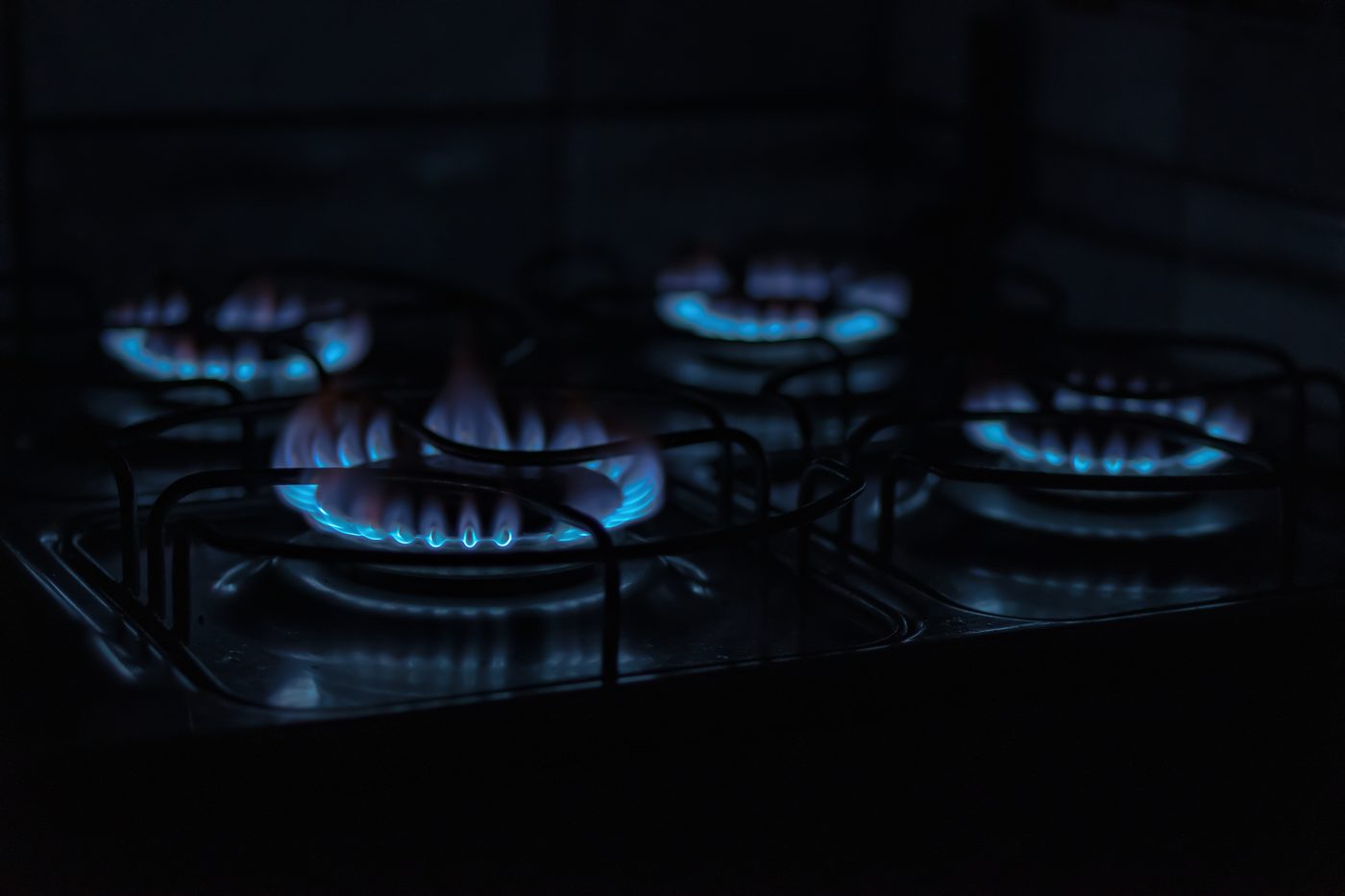
- a yellow or orange flame on the hob or fire, rather than crisp blue
- black or brown marks around an appliance (both listed by Gas Safe Register as signs of an unsafe appliance)
- a pilot light that keeps going out
- more condensation than usual on windows near the boiler or fire
- headaches, dizziness, nausea or tiredness that ease when you leave the house
The last point matters most. The NHS lists headache, dizziness, feeling or being sick and feeling weak among the symptoms of carbon monoxide poisoning (NHS). If you suspect it, get fresh air, stop using the appliance and seek medical help. If you smell gas, call 0800 111 999.
Carbon monoxide alarms
Even without a legal duty, an audible carbon monoxide alarm in each room with a boiler or gas fire is a simple extra layer of protection. See our carbon monoxide alarms page for placement and testing.
Booking
London Gas Engineers carries out gas safety checks for homeowners in Enfield and across north and east London. Whoever you book, ask to see their Gas Safe ID card and check the back lists boilers, cookers and gas fires if you have them.
Quick questions
Is a homeowner gas safety check the same as a landlord certificate?
The tests are similar, but a homeowner does not need the formal landlord record. You can still ask the engineer for a written report of what was checked.
Does a boiler service count as a gas safety check?
A service maintains the boiler. A safety check looks at whether each gas appliance and flue is safe. A service will cover safety on the boiler itself, but not your hob or gas fire unless they are included.
How often should a homeowner have a gas fire checked?
Follow the manufacturer's instructions. If there are none, HSE recommends gas appliances and flues are serviced every year unless a Gas Safe registered engineer advises otherwise.
Last updated 23 October 2026. Written for homes in London. Rules can change, so check the linked sources for the latest position.