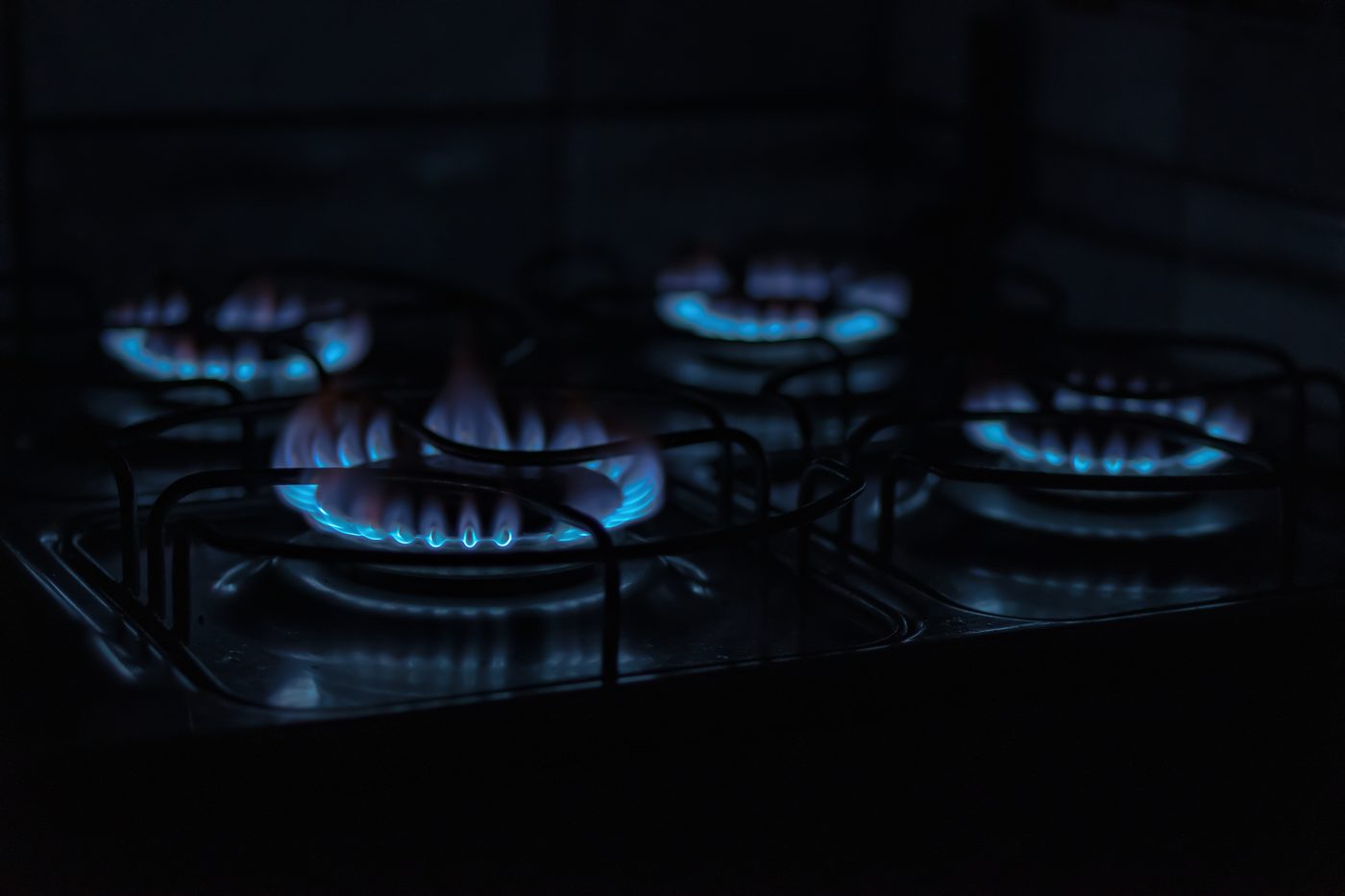
Short answer: A gas fire in a Victorian fireplace usually burns into the old brick chimney, so a proper service checks the chimney as well as the fire. A Gas Safe registered engineer cleans the burner, tests that fumes go up the flue and not into the room, and checks ventilation. HSE recommends servicing yearly if the maker gives no interval.
Why old fireplaces need more attention
Stoke Newington, Clapton and Stamford Hill are full of Victorian terraces with original fireplaces in the front and back rooms. Many of those fireplaces had gas fires fitted into them, often decades ago, burning into the original brick chimney. That type of fire is a conventional flue fire. It relies on the chimney to pull the fumes up and out.
Gas Safe Register’s gas fire guide describes several types:
| Type | How the fumes leave | What it means in an old house |
|---|---|---|
| Conventional flue | Up an open chimney or flue liner by natural draught | Depends on the condition of a chimney that may be over a hundred years old |
| Balanced flue | Through a sealed duct in the outside wall | Fits on an outside wall, so less common in a middle terrace chimney breast |
| Flueless | Into the room, with a catalyst | Room size and an opening window matter, per Gas Safe |
| LPG | Bottled gas | Less common in Stoke Newington, where mains gas is normal |
The fire itself may be in fine condition. The chimney is often the weak point. A chimney shared with a neighbour, a stack rebuilt during a loft conversion, or a cap fitted to stop rain can all change how well it draws.
What a gas fire service covers
Gas Safe says the engineer will check that the fire has no faults and is running safely and efficiently, following the manufacturer’s guidelines. On a conventional flue fire in an old fireplace, that normally includes:
- Visual check of the fire, the fireplace opening, the hearth and any surround.
- Removing the coals or fuel bed and cleaning the burner and the area behind it.
- Checking the burner, injector and pilot so the flame burns cleanly.
- Testing the flue. A flue flow test shows smoke is drawn up the chimney. A spillage test checks fumes are not coming back into the room with the fire lit.
- Checking ventilation in the room, including any air vent the fire needs.
- Checking gas pressure and tightness at the fire.
- Checking any safety devices fitted to the fire.
- Rebuilding the fuel bed in the right pattern. Coals in the wrong place can upset the flame and cause soot.
You can ask the engineer for a written service report. Gas Safe calls this a Gas Safety Report.
Warning signs of an unsafe gas fire
Gas Safe Register lists signs that a gas appliance may be producing carbon monoxide:
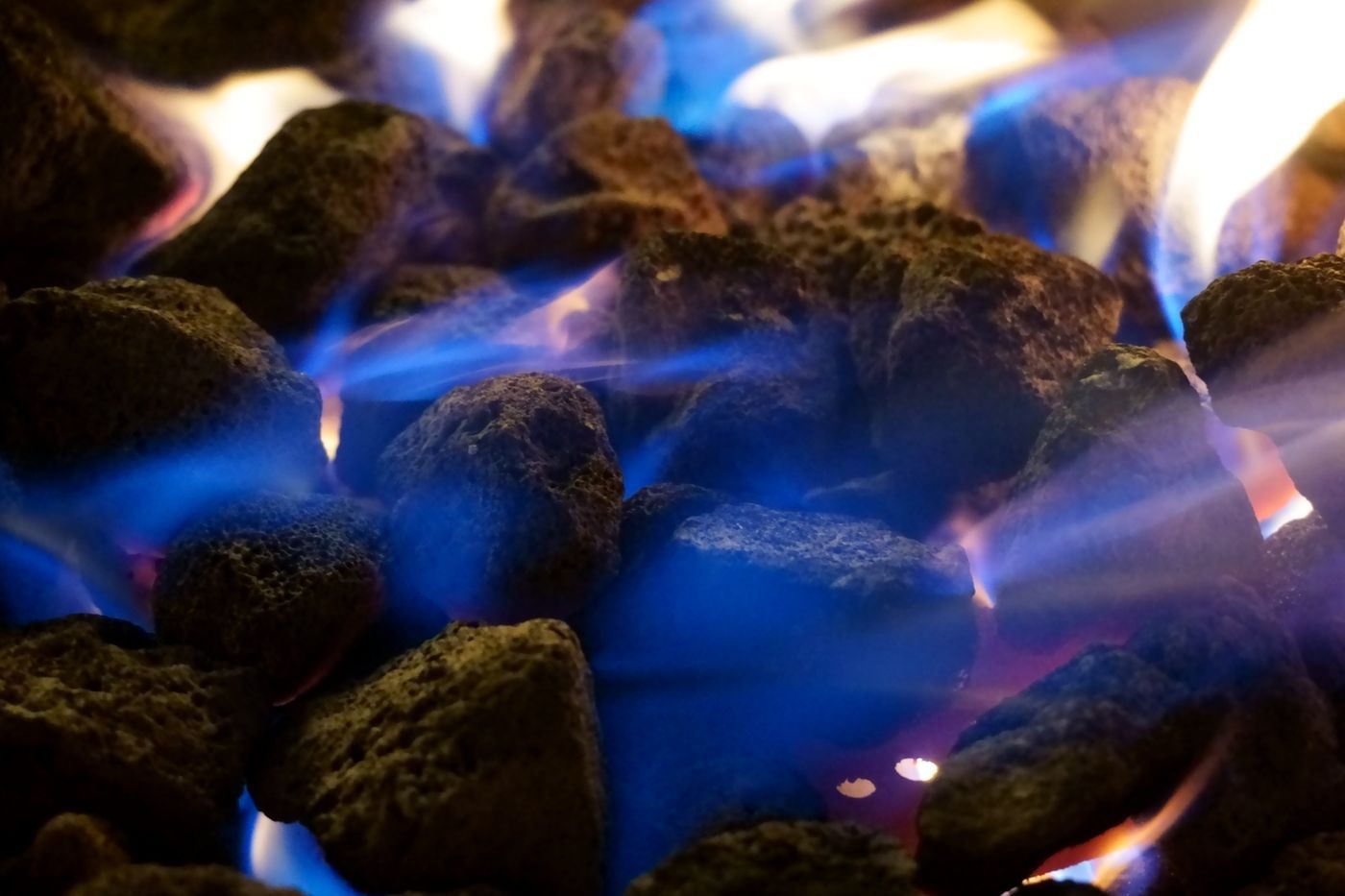
- A floppy yellow or orange flame instead of a crisp blue one
- Dark, sooty staining on or around the fire
- A pilot light that keeps blowing out
- More condensation on the inside of windows than usual
If you see any of these, stop using the fire and have it checked. If you or others in the house get headaches, dizziness or nausea that ease when you go out, think about carbon monoxide. The NHS explains the symptoms. Get fresh air, turn the fire off, and call 0800 111 999. Call 999 if anyone is seriously unwell.
Landlords with gas fires
Many flats in north London HMOs and conversions still have gas fires in what are now bedrooms. HSE is specific about this. Since 31 October 1998, a room converted for use as sleeping accommodation should not contain:
- A gas fire, space heater or water heater over 14 kW gross input unless it is room sealed
- One of 14 kW or less, or any instantaneous water heater, unless it is room sealed or has an atmosphere sensing device
Where a room was already a bedroom before 1998, you need a risk assessment to decide whether it can stay a bedroom with that appliance.
Every gas fire you provide must be on the landlord gas safety certificate. Under the 2022 England regulations, a room used as living accommodation with a fixed combustion appliance, including a gas fire, needs a carbon monoxide alarm (GOV.UK).
Service, replace or remove
Sometimes the service shows the fire is fine. Sometimes it shows the chimney will not draw, parts are no longer made, or the fire is not safe to keep using. Your options are then:
- Repair the fire, if parts are available and the flue tests pass.
- Replace it with a new fire suited to the flue. A new gas fire must be notified to building control by the installer, and you receive a Building Regulations Compliance Certificate. Approved Document J also requires a CO alarm when a new fixed gas appliance is fitted.
- Remove it and cap the gas, leaving the fireplace as a decorative feature or for other use.
If the fire hides a back boiler, removal becomes a heating job too. Our guide to back boiler removal explains what that involves.
Booking a service
London Gas Engineers services, repairs and removes gas fires across north and east London. See our gas fire servicing and removal page. When you get in touch, tell us the make of fire if you know it, whether it sits in an open fireplace, and whether the property is rented. The price is confirmed after a look at the fire and the flue.
Quick questions
How often should a gas fire be serviced?
HSE says gas appliances and flues should be serviced according to the manufacturer's instructions, and if there are none, annually unless your Gas Safe registered engineer advises otherwise. For landlords, the fire must also be on the annual gas safety check.
Does my chimney need sweeping if I have a gas fire?
The engineer needs to know the chimney is clear and drawing properly. Old London chimneys can collect soot, fallen mortar and nesting material. If the flue tests show a problem, the engineer will tell you, and sweeping or other work may be needed before the fire is used.
Can a gas fire be in a bedroom?
HSE says that since 31 October 1998, a room converted for sleeping should not contain a gas fire unless it is room sealed, or for smaller fires, room sealed or fitted with an atmosphere sensing device. Older bedrooms with such fires need a risk assessment.
Last updated 23 October 2026. Written for homes in London. Rules can change, so check the linked sources for the latest position.